Over the past 15 years since the metro was extended to Daxing, it has become a vital artery supporting the district’s development. Especially after the opening of Daxing International Airport, transit modes such as the airport express and intercity railways have continued to expand Daxing’s rail transit network. Evolving from relying initially on the Daxing Line and Yizhuang Line to connect with the capital’s core area, Daxing now reaches Tianjin and Hebei via intercity railways, thus emerging as a hub gateway of rail transit in the Beijing-Tianjin-Hebei region.
If traditional railways are also taken into account, Daxing boasts a quite long history of rail transit. Back in the era of "green-skinned trains", Huangcun Station used to handle numerous passing long-distance trains. However, taking trains was then regarded as a way to "travel long distances", which is vastly different from the commuter-oriented nature of today’s intercity railways.
Adjacent to Huangcun Station is the brand-new Daxing Railway Station, located in the core area of Daxing New Town. It was put into operation in September 2019, simultaneously with the Beijing-Xiong’an Intercity Railway, linking Beijing West Railway Station, Daxing International Airport and Xiong’an Station. The "Urban Corridor" opened at the end of 2024 has transformed the two stations—one new and one old—from being merely adjacent to each other into an integrated transfer hub. The walking time for transferring from Daxing Railway Station to the Daxing Metro Line has been shortened to around 10 minutes, attracting more travelers to choose this route.
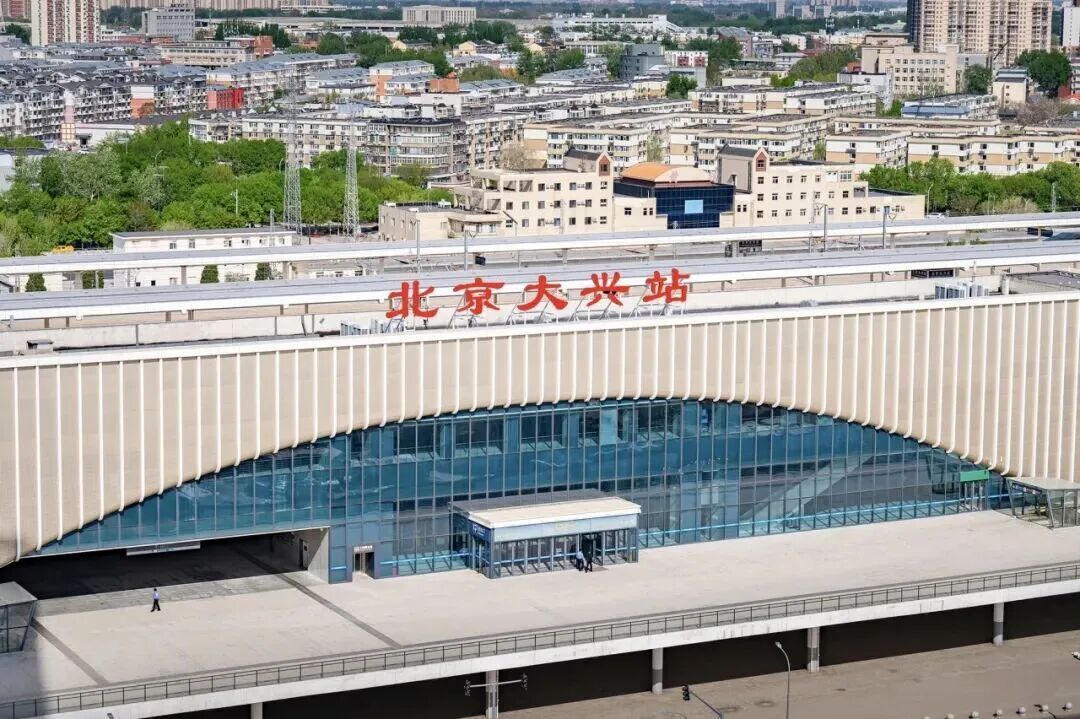
In April this year, Daxing Railway Station launched new originating services bound for Tianjin West, providing additional travel options for Beijing-Tianjin commuters. During the May Day holiday, temporary extra trains were put into operation, drawing a large number of visitors traveling to see relatives and for leisure. Since the start of the summer travel season, an additional 24 pairs of peak-hour high-speed EMU trains have been added for the round-trip route between Tianjin West and Daxing Railway Station.
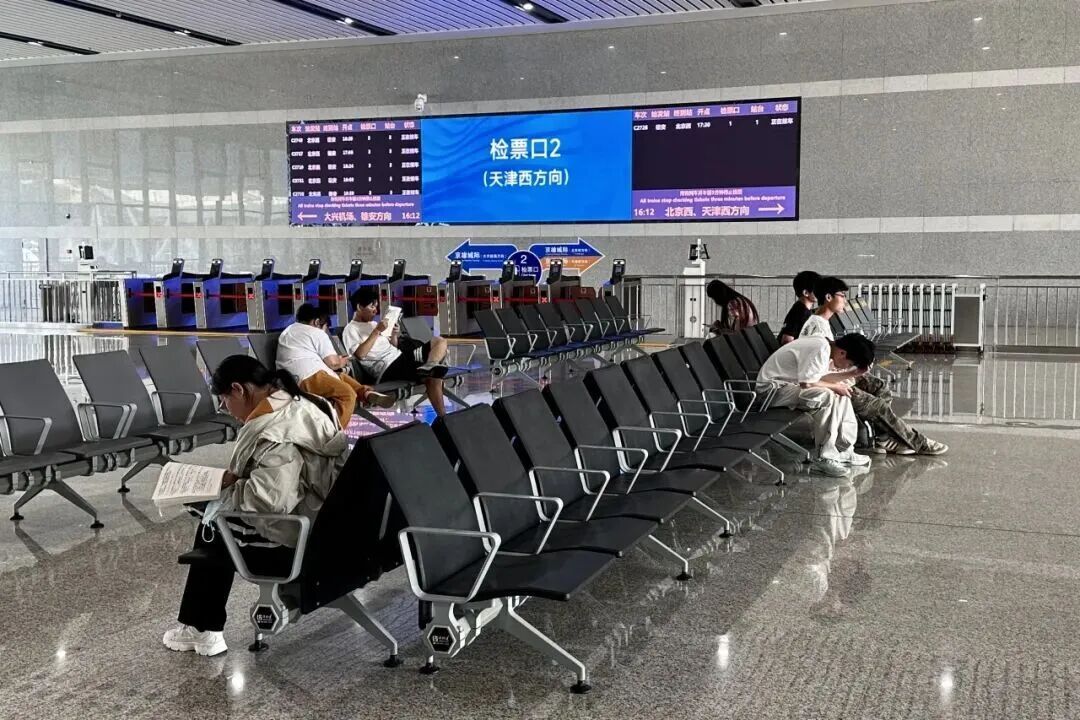
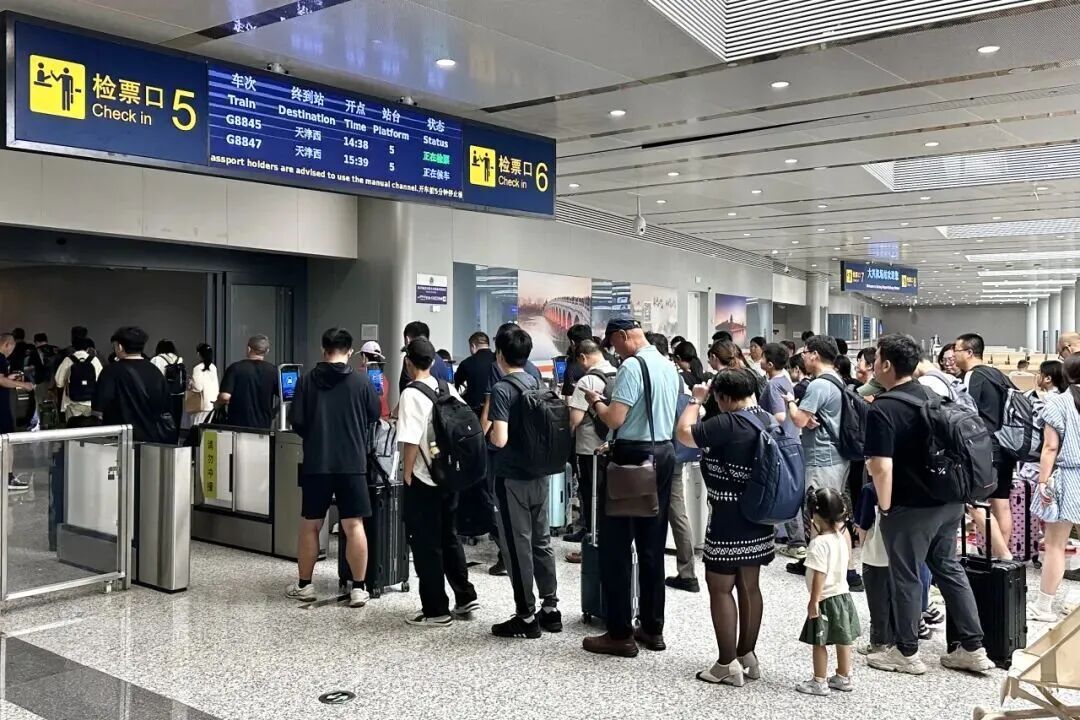
These originating trains have even attracted passenger flow from downtown Beijing, boosting the vitality of Daxing Railway Station. During the popular peak hours—often with additional trains scheduled on Friday evenings—the carriages are frequently fully occupied. To address this, Daxing Railway Station has specially added exclusive ticket check-in channels for services bound for Tianjin West.
Heading south from Daxing Railway Station, one reaches Daxing Airport Station. Beneath Daxing International Airport, multiple rail transit lines run north-south. From east to west, they are arranged as follows: the Beijing-Xiong’an Intercity Railway, the Daxing Airport Metro Line - Xiong’an R1 Line, and the Tianjin-Xingtai - Huailai-Xingtai Intercity Railway. High-speed trains operating on these lines connect to stations such as Beijing West, Tianjin West, Shijiazhuang, Tangshan, Langfang North, and Xiong’an.
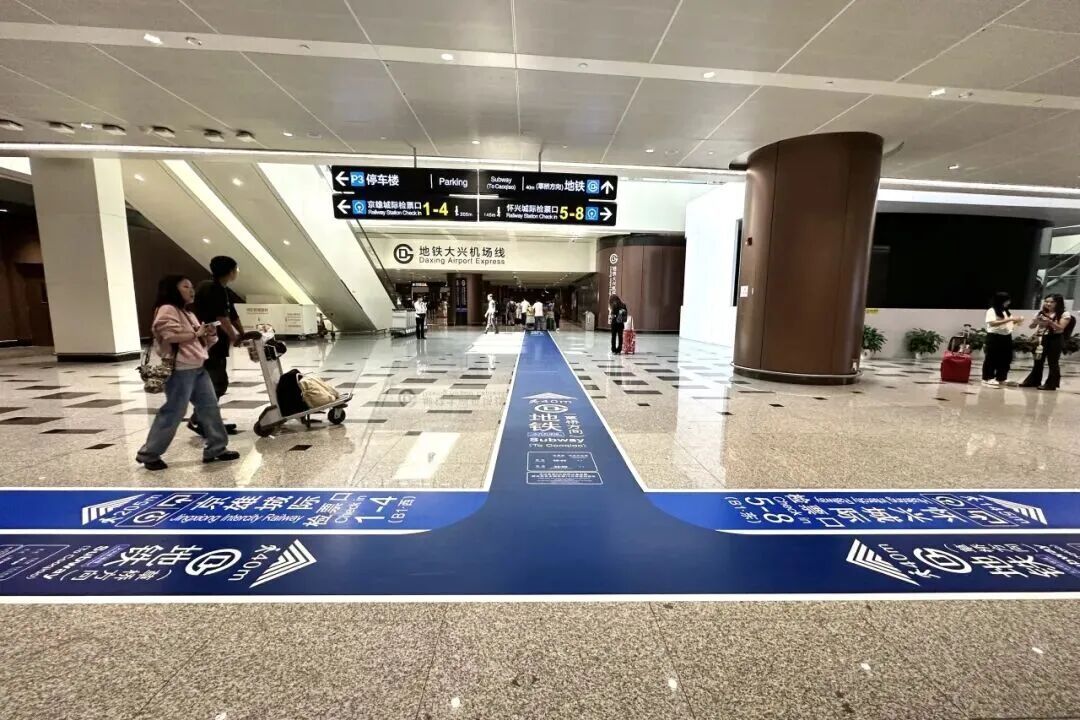
Leveraging the status of Daxing International Airport as an international aviation hub, destinations in Tianjin and Hebei account for a significant proportion of the high-speed rail passenger flow at Daxing Airport Station. During the 2025 summer travel season, Daxing Airport Station has added 5.5 pairs of peak-hour trains (11 trains in total) traveling to and from Tianjin West. In conjunction with the Tianjin West Railway Station City Terminal, which began trial operation on June 20th, these additions have effectively met the travel needs of passengers heading from the airport to Tianjin and neighboring Hebei areas such as Gu'an, Yongqing, Anci, and Shengfang.
The construction and development of Daxing International Airport have strongly boosted regional rail transit, industrial expansion, and cultural tourism, driving a rapid growth in business, tourism and family-visiting passenger flows. As a "demonstration zone for coordinated development and a thriving, open gateway new city", Daxing District has forged increasingly close ties with Tianjin and Hebei. A positive cycle has taken shape between the rising travel demands and the continuously improved rail transit services. Travel needs for certain destinations are now addressed locally, and Daxing has initially emerged as a rail transit hub radiating across the Beijing-Tianjin-Hebei region.